
A practical Chengdu tea house guide for fitting a calm local-life stop into a panda visit, city day or slower private itinerary without treating it as another rushed attraction.
Use this guide as one planning layer, then match the route with travel dates, arrival city, hotel class, group size, and daily pace.
A Chengdu tea house is usually most rewarding when it is not treated as a box to tick. It can be a pause after a busy morning, a way to see the city at a slower pace, or a gentle setting for a conversation before an evening walk. The point is not to find one universally “best” tea house. It is to choose a setting and a time that suit the rhythm of your Chengdu day.
This guide is about travel planning rather than a fixed list of venues. Individual opening times, seating arrangements, menus, accessibility and local conditions can change, so confirm the final choice close to your travel date. For the wider city structure, start with the Chengdu top sights and local life guide.
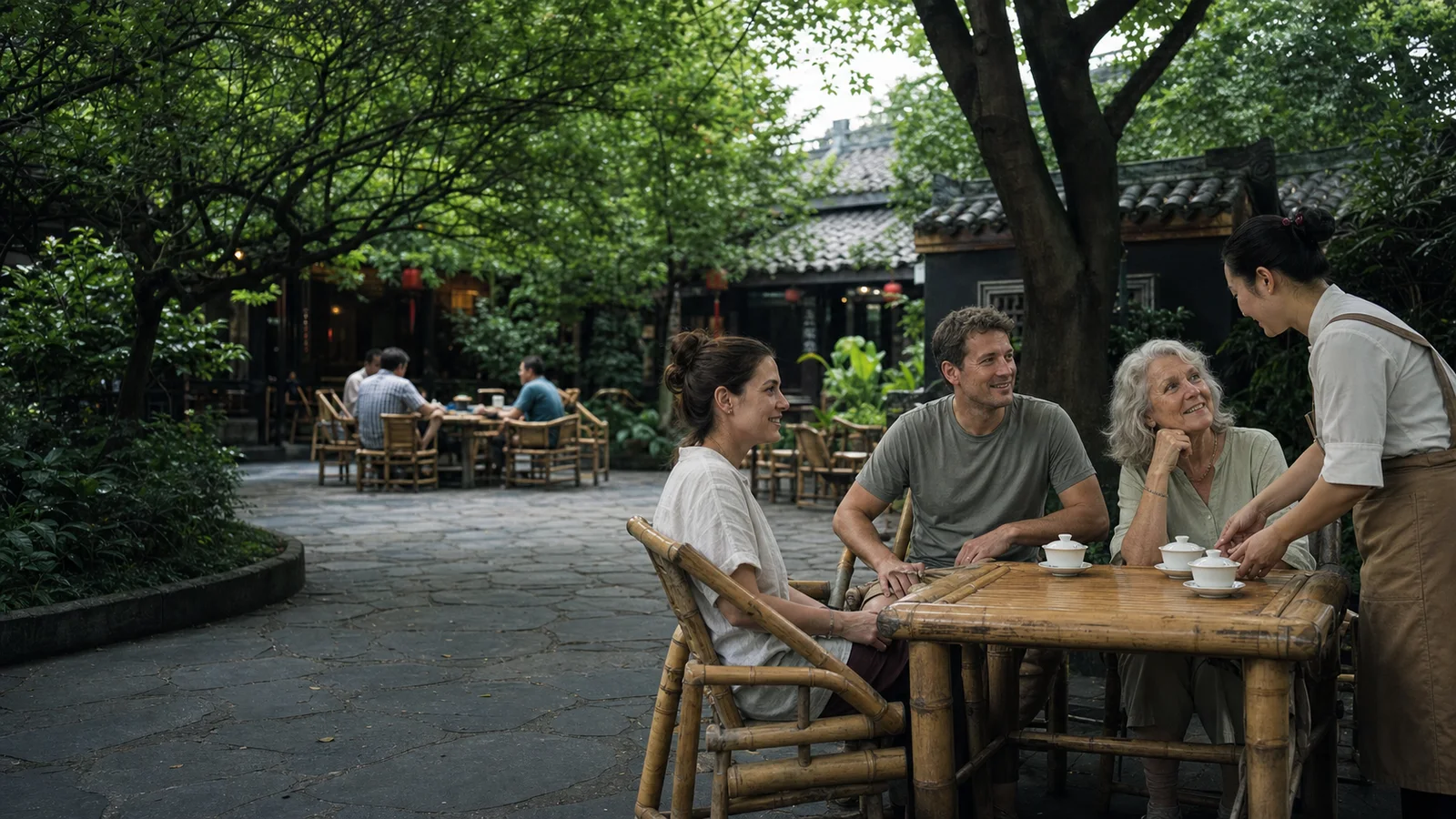
Quick answer: give the tea house a real window, not leftover minutes
Choose a tea house stop when the group has finished its main activity, has time to sit comfortably, and would benefit from a softer transition before dinner or an evening walk. It is especially useful after an early panda visit, during a city day with an older relative, or when the weather and walking pace make another major attraction less appealing.
Skip it on a tightly timed arrival or departure day, or when the schedule already contains too many transfers. A tea house is meant to slow the day down. It cannot make an overpacked plan feel relaxed.
| Travel situation | How a tea house can fit | What to avoid |
|---|---|---|
| Panda Base morning | Use it after lunch or a hotel reset as a quieter city experience. | Adding another distant major sight immediately afterward. |
| Flexible Chengdu city day | Place it between a neighborhood walk and dinner, with enough time to sit. | Treating it as a fixed show with a rushed in-and-out visit. |
| Mixed-age or family group | Use it as a seated reset where the group can choose its own pace. | Assuming every venue has the same seating, stairs or restroom access. |
| Rainy or hot afternoon | Make it a lower-exertion alternative to another long outdoor block. | Relying on it as a substitute for every planned activity without checking comfort. |
| Departure or transfer day | Choose it only when luggage, hotel checkout and transport timing are already protected. | Putting it before a tight station or airport run. |
What makes a Chengdu tea house experience feel local
The appeal is usually the setting and pace: shaded outdoor seating, conversation, a simple cup of tea, local regulars and time that is not organized around a major landmark. Some travelers enjoy a quiet corner and people-watching. Others prefer a setting where the group can ask a guide about tea habits, neighborhood life or Sichuan customs. Neither choice needs to become a formal tea ceremony to be worthwhile.
Be considerate in shared spaces. Keep voices low, ask before photographing other guests, and do not assume that a local table is part of the visitor experience. A good tea stop lets travelers observe Chengdu’s daily rhythm without turning it into a performance for the group.
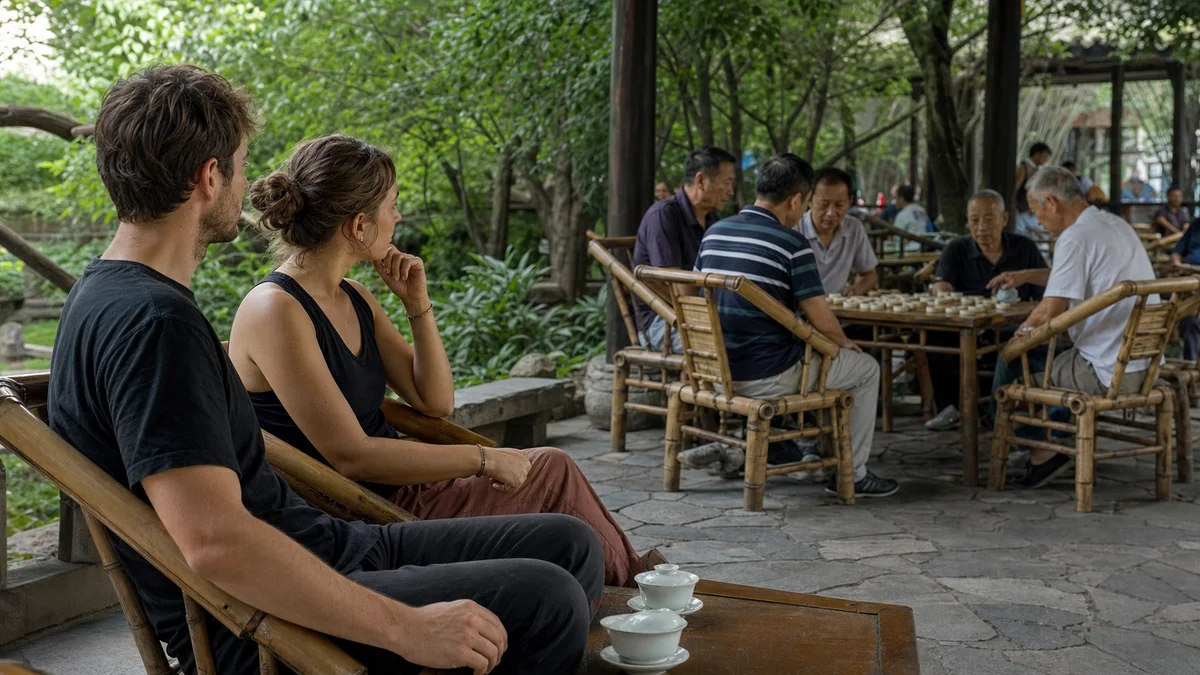
Build it around the panda day, not against it
The Chengdu Panda Base and food day guide is a useful starting point because the panda visit often carries the day’s earliest and most focused sightseeing block. If the group has energy after lunch, a tea house can provide a genuine change of pace before a gentle neighborhood walk or dinner. If the morning has already been long, use the tea stop as the main afternoon experience instead of forcing another large museum or long transfer.
This is also why a tea house suits many private itineraries. The arrangement can adapt to how the group actually feels that day. It should not be advertised as a guaranteed stop at one named venue before dates, hotel location, walking comfort and the wider route are known.
Choose the setting by your group, not by a generic “must-see” list
- For first-time visitors: choose a comfortable, easy-to-reach setting that can sit naturally between city sightseeing and dinner.
- For older travelers: prioritize reliable seating, shade, nearby restrooms and a route that does not add unnecessary walking.
- For families: keep the stop flexible and short enough that younger travelers do not feel trapped in a long adult activity.
- For food-focused travelers: pair tea with a simple, well-timed local meal instead of trying to add a second full tasting itinerary.
- For travelers who prefer calm: select a quieter time and avoid stacking it with the busiest commercial evening areas.
How long should you allow?
Allow enough time to arrive, settle in, drink tea and leave without watching the clock. The exact length depends on the group, but the practical rule is simple: if the schedule only leaves a few minutes, it is better to save the tea house for a freer afternoon or evening. The experience becomes more meaningful when there is room for ordinary conversation and a change of pace.
If you are deciding between tea, another attraction or more time at the hotel, use the China Itinerary Planner to test the overall route. It is better to keep one Chengdu afternoon coherent than to collect several disconnected stops.
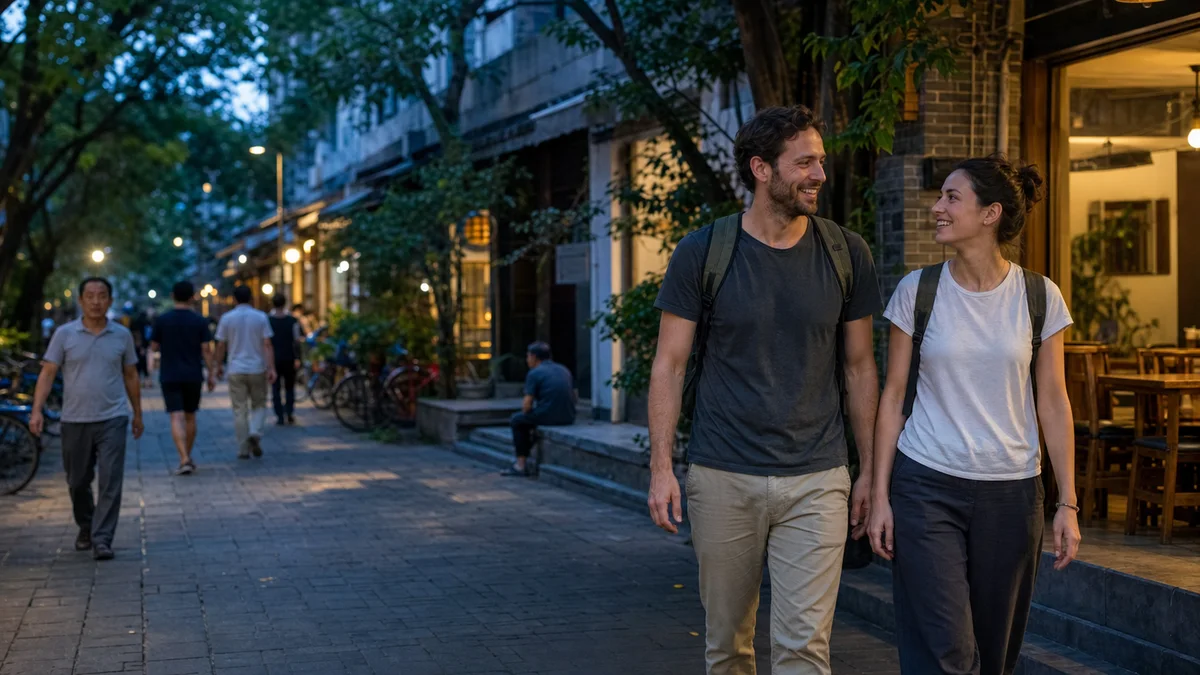
Use the tea house to improve the route, not expand it
A tea house is not a reason to add another city or cut a necessary hotel night. It is a Chengdu experience that helps the day breathe. When the route is already clear, it can add local texture between headline sights and give travelers a more balanced memory of the city.
For an onward flight or train, keep transport first. The Chengdu departure-day guide explains why a relaxed tea stop belongs only after luggage and transfer timing are secure. Share your dates, hotel area, group needs and priority experiences when you request a tailored Chengdu plan.
More Planning Links for This Guide
Related Tour Ideas
Tour pages that match the same city, topic, or planning intent.



Destination Planning Links
City and destination-topic pages that help readers go deeper.


Related Travel Guides
Article links for the next planning question.


Topic Hubs
Topic pages that collect routes or guides around the same intent.


Plan a Trip from This Guide
Share your travel dates, group size, and the ideas you liked in this guide. We can turn them into a private China itinerary.