
A practical guide to why China private-tour costs change with group size, hotel rooms, vehicle space, guide days, meals, tickets and intercity travel, without treating a sample estimate as a quote.
Use this guide as one planning layer, then match the route with travel dates, arrival city, hotel class, group size, and daily pace.
A private China trip does not become cheaper in the same way for every extra traveler. Some parts of the day can be shared: a suitable vehicle, a guide, an airport pickup or a private sightseeing block. Other parts remain tied to each traveler or each room: hotel nights, admissions, most meals, rail or flight tickets, insurance and connectivity. That is why a useful estimate starts with the structure of the group, not a single headline price.
Use this guide with the China Trip Cost Calculator. It is designed to make assumptions visible before you request a date-specific quote. Actual hotel, transport, attraction and service availability still depends on travel dates, route, room needs and the final operating plan.
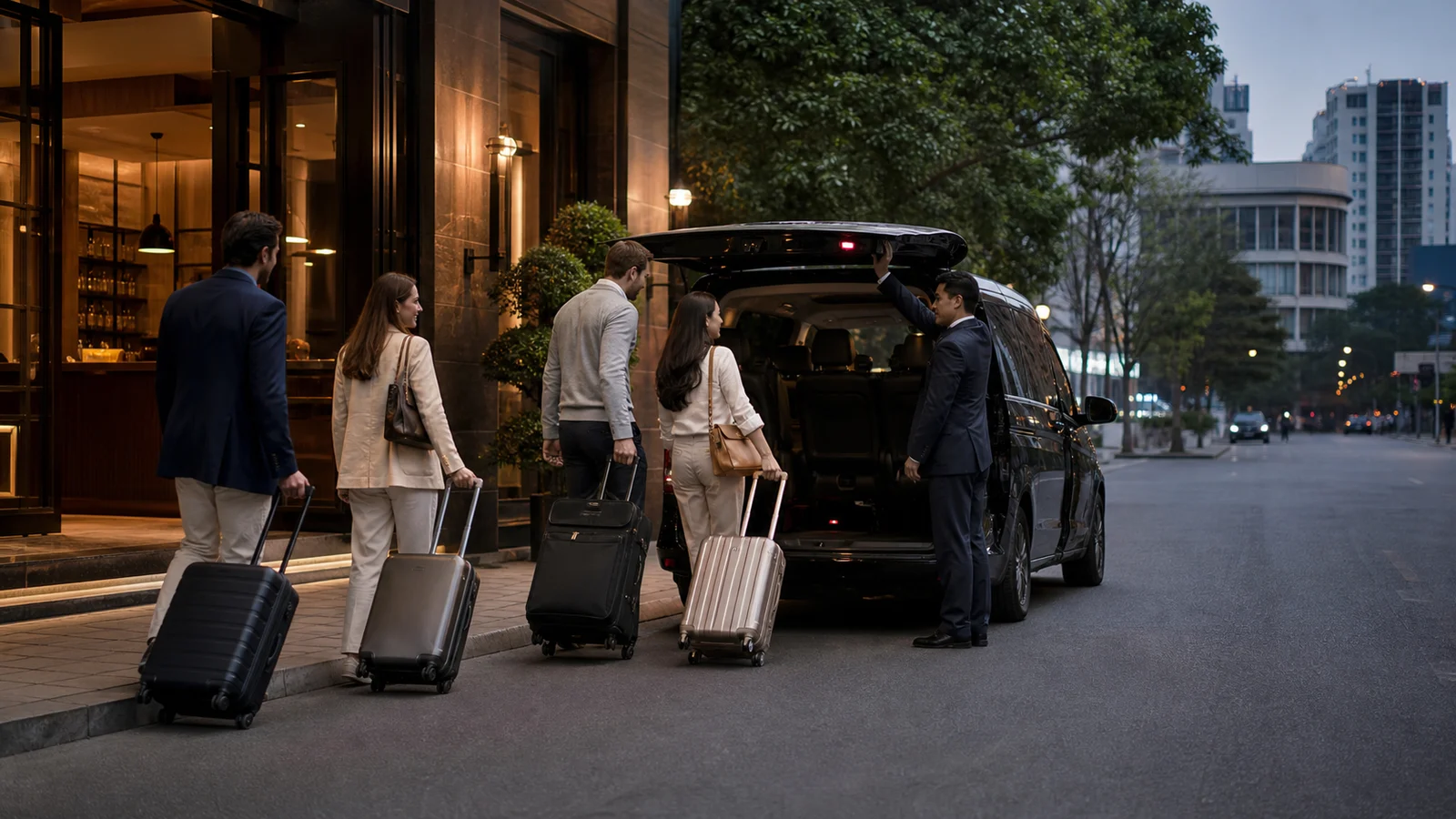
Quick answer: the per-person figure often falls, but the total trip does not simply divide
Two travelers commonly carry more of the fixed daily arrangement between them. A group of four or six can often share more of an appropriate vehicle and guide day, so the per-person portion may improve. But larger groups can also need a larger vehicle, more hotel rooms, a different room configuration, more luggage capacity, additional guide support or a slower restaurant and attraction rhythm. The right question is not “what is the cheapest group size?” It is “what arrangement keeps the route comfortable and realistic for this group?”
| Cost area | Usually shared or individual? | What changes with group size |
|---|---|---|
| Private vehicle and driver | Usually shared for the group | A larger party may spread the day cost, but may also need a bigger vehicle when luggage or mobility needs require it. |
| Guide service | Usually shared by the touring group | One guide may be appropriate for a small group; larger or more complex groups can need a different service plan. |
| Hotels | Usually priced by room and night | Room count, bedding, connecting rooms and hotel area matter more than a simple per-person split. |
| Meals and admissions | Mostly individual | These rise with the number of travelers, although shared dishes or a pre-arranged meal can change the dining pattern. |
| Rail, flights and insurance | Mostly individual | These need dated confirmation and should never be treated as a permanent package number. |
Two travelers: pay for a private arrangement, keep the route focused
A couple often chooses a private trip for flexibility: hotel pickup, a guide who can adjust walking speed, a quieter lunch or a direct transfer between cities. The trade-off is that fewer people share the vehicle and guide components. That does not make a two-person trip poor value. It makes the route design important. A compact itinerary with fewer one-night stays and sensible hotel locations can protect both time and budget better than adding another city simply to make the trip look larger.
For a couple, first decide which days genuinely benefit from a private vehicle or guide. A city day, an airport arrival, a Great Wall outing or a countryside extension may be the strongest candidates. A free evening or simple local walk may not need the same level of arrangement.
Four travelers: often the clearest shared-service case
Four adults, or a family using two rooms, can often share the core daily logistics without making the day feel crowded. The vehicle still needs to hold every suitcase, not only every person. The hotel needs a room plan that works for the actual family or friendship group. A comfortable four-person itinerary is therefore less about a mathematical division and more about matching vehicle, rooms and activities before the route is finalized.
When comparing a four-person estimate, check whether it assumes twin rooms, a family room, separate room categories, a private guide every day or only on key sightseeing days. Those choices explain the number more clearly than a generic “per person from” figure.
Six travelers: check comfort before assuming a larger group is automatically better value
Six travelers can make group logistics efficient, but the vehicle, hotel and meal plan need a second look. A cramped van, too little room for luggage or a restaurant schedule built around one rushed table can remove the benefit of sharing fixed costs. Mixed-age groups should also consider who needs shorter walks, a more direct hotel return or more time at meals.
A good proposal states the vehicle category, luggage expectation, room approach and guide coverage before payment. It should not rely on a low group total while leaving the practical details undefined.

What changes the estimate more than group size
- Travel dates: hotel supply, transport availability and holiday demand are date-specific.
- Hotel level and room layout: a twin room, double room, family room and connecting-room request are not interchangeable.
- Route shape: frequent hotel changes, remote sightseeing and one-night stays create more transfer friction.
- Luggage and mobility: these can change the appropriate vehicle and how much time the group needs.
- Private-service scope: driver-only, guide-only and guide-plus-vehicle are different arrangements.
Intercity transport should be confirmed separately
Do not reuse an old rail or flight number inside a new estimate. Intercity tickets are tied to the actual travel date, passenger details and available service. The China Railway 12306 English service is the correct starting point for current rail searches; final routing also needs station-transfer time, luggage, hotel location and the group’s pace.

Use the calculator as a planning conversation, not a promise
Start with the trip length, adults and children, intended hotel level, number of private vehicle and guide days, likely intercity legs, and any international flights or visa costs you want to include. The calculator makes those choices visible and labels the result as an estimate rather than a quote.
Then use the China Itinerary Planner to test whether the city sequence is realistic. A more coherent route can reduce unnecessary transfer days. If you already know that you need a hotel pickup, city sightseeing vehicle or a regional day trip, compare the scope on the private transport service page before requesting a detailed proposal.
What to send for a useful quote
- Travel dates or a workable date range.
- Adults, children’s ages and room preferences.
- Arrival and departure cities, plus any flights already booked.
- The cities or experiences that are truly essential.
- Hotel level, luggage count, mobility needs and whether guide service is needed every day.
The best China private-tour estimate is transparent about what can be shared, what remains individual and what must wait for the travel date. Use the calculator to form a first budget range, then let the final route, hotel plan and group needs determine the actual quote.
More Planning Links for This Guide
Related Tour Ideas
Tour pages that match the same city, topic, or planning intent.



Destination Planning Links
City and destination-topic pages that help readers go deeper.

Related Travel Guides
Article links for the next planning question.

Topic Hubs
Topic pages that collect routes or guides around the same intent.


Plan a Trip from This Guide
Share your travel dates, group size, and the ideas you liked in this guide. We can turn them into a private China itinerary.